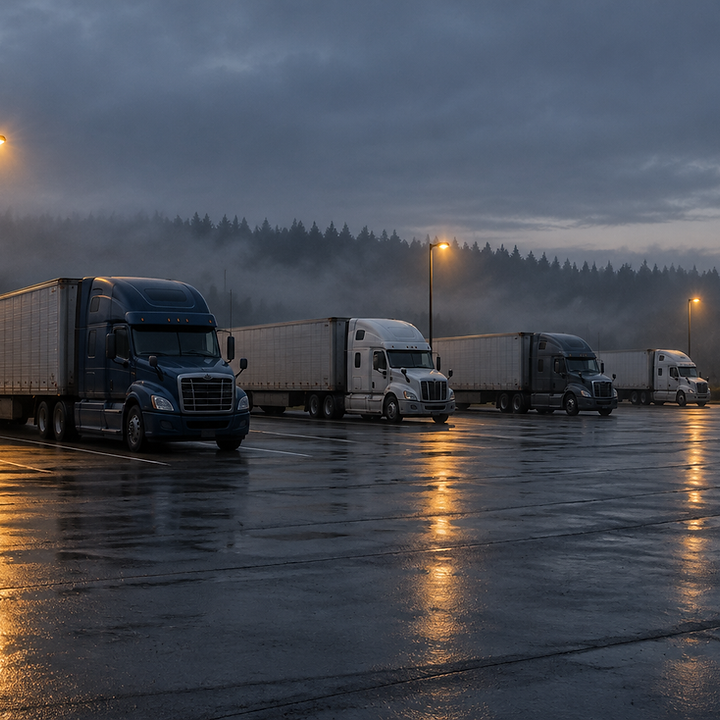
Freight is the trade where factoring is most established in Canada. The reason is structural. A carrier delivers a load, produces a signed bill of lading, issues an invoice and then waits, often for a broker who is waiting on a shipper. Fuel, insurance, maintenance and driver pay do not wait with it.
How the cycle works
A typical arrangement runs like this. A broker or shipper issues a rate confirmation setting the rate and terms. The carrier moves the load and obtains a signed bill of lading at delivery. The carrier invoices the broker, attaching the signed paperwork. The broker then settles on its own cycle, which may run well past the terms printed on the invoice.
Because the documentation is standard and the invoice follows a completed, verified delivery, the receivable is easy to describe and easy to check. That is what makes it attractive to a funding provider, and why freight factoring exists as a category rather than as a general service applied to transport.
How freight factoring is used
The carrier sells the load invoice to a provider after delivery. The provider verifies the paperwork, advances part of the invoice value and collects from the broker. When the broker pays, the reserve is released less the provider's fee.
Most freight arrangements use notification. The broker is told that the invoice has been assigned and is asked to pay the provider directly. Brokers see this constantly, and many have a standard process for it. Where a broker's contract with the carrier requires consent to assignment, that has to be dealt with before the invoice is sold.
Some carriers use factoring continuously, selling every load. Others use it on selected lanes or with slower paying brokers. What a provider will accept depends on its own criteria and the spread of customers on the ledger.
What providers look at
- The broker or shipper paying the invoice, and its payment record.
- Whether the paperwork is complete and the delivery receipt is clean.
- How concentrated the carrier's revenue is among a few brokers.
- Whether the loads are domestic or cross-border.
- Any history of deductions, short payments or disputes on previous loads.
Cautions specific to freight
Two issues come up more often in transport than elsewhere. The first is paperwork discipline. A delivery receipt signed with a note about damaged freight, or a bill of lading that does not match the rate confirmation, gives the broker a reason to hold payment, and a held payment is a disputed invoice. The second is double brokering and identity problems in the market, which make some brokers harder to verify than others.
Detention, accessorial charges and fuel surcharges also need care. Where these appear as separate line items, be clear about which parts of the invoice the provider is buying, and whether unapproved accessorials are included.
Finally, if you run cross-border lanes, ask about currency and about invoices billed to customers outside Canada. Not every provider buys them, and the answer affects which loads you route through the arrangement.
When it fits, and when it does not
Freight factoring fits carriers whose cash is tied up in delivered loads, particularly where brokers pay slowly. It fits less well where a carrier already has working capital, or where the volume of paperwork per load would overwhelm the office.
It also depends on margins. Transport margins are thin, and a fee that looks modest against an invoice can be significant against the profit on the load. Work through the arithmetic on your own rates before you commit.
Questions to ask a provider
- Which documents do you require for each load?
- Do you buy cross-border invoices, and in which currency?
- Is the arrangement recourse or non-recourse?
- How are deductions and short payments handled?
- Do you require notice of assignment to each broker?
- Is there a minimum volume or a term to the agreement?
Related types
Freight arrangements are usually written on recourse or non-recourse terms, and often cover the whole ledger rather than selected loads, which is described under full turnover factoring. For the underlying mechanics, read how invoice factoring works, and for the trade context see the trucking and freight guide.