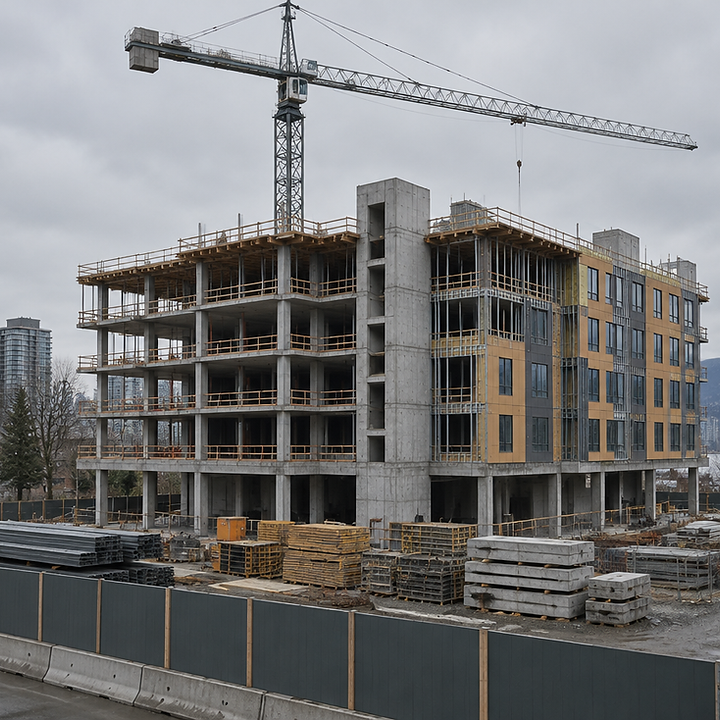
Construction is paid after the fact and in arrears. Materials are bought, labour is paid, and the claim goes in at the end of a period for work that was completed weeks earlier. Then it is reviewed, certified, and paid through a chain that begins with the project owner.
How a contractor gets paid
A contractor submits a progress claim for work completed in a period, usually with a schedule of values behind it. The consultant or owner reviews the claim, certifies a portion, and issues a certificate. Payment follows, minus a holdback. On a large project the sequence repeats every month until the work is complete.
Behind the general contractor sit subtrades and suppliers, each invoicing the party above them. Money moves down that chain only after it has moved in, which means the businesses furthest from the owner wait longest.
Why receivables build up
- Materials and labour are spent before the first claim is certified.
- Claims are submitted monthly, so a month of cost precedes each invoice.
- Certification can reduce a claim without explaining which line was cut.
- Change orders are performed before they are priced, approved or invoiced.
- Holdbacks are retained until the end, sometimes for a year or more.
Holdbacks and retention
A holdback is the portion of each claim kept back until the work is certified complete. It is not a penalty, and it is not usually in dispute. It is simply money that cannot be collected yet.
Because of that, a provider buying construction receivables will separate the collectable portion of a claim from the holdback. Some will fund the balance and ignore the holdback entirely. Others will treat a final holdback release as a separate transaction once it falls due.
How factoring is used
Factoring appears most often among subtrades and material suppliers, where a certified claim is waiting but payroll is not. The invoice is sold after certification, with the certificate and the approved schedule attached. Under a notification arrangement, the paying party is told to settle with the provider.
Sector cautions
Four issues come up repeatedly. Back charges, where a general contractor deducts for cleanup, delays or defective work, reduce what is collected and are often raised late. Unapproved change orders are not collectable until they are signed. Lien rights and their preservation periods differ by province, and assigning a receivable can interact with them. And a dispute with the owner can freeze payment down the entire chain, which affects invoices that are otherwise perfectly good.
Questions to ask a provider
- Do you require certification before buying a claim?
- How do you treat the holdback portion?
- What happens if a back charge is raised after the invoice is sold?
- Will you buy claims under a contract with a pay when paid clause?
- Is the arrangement recourse or non-recourse?
Related guides
Risk terms are compared under recourse and non-recourse factoring. For provincial context read the Alberta, British Columbia and Ontario guides. The process itself is set out in how invoice factoring works.