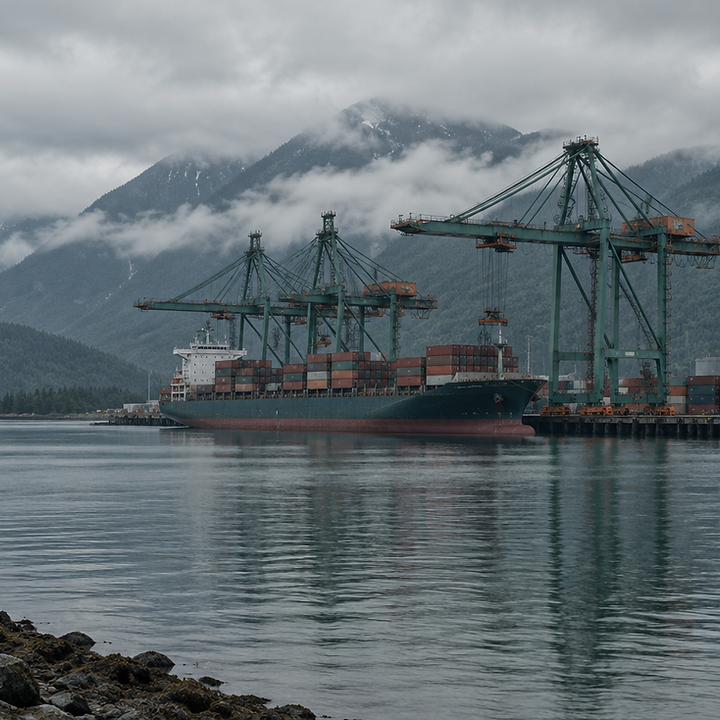
Vancouver runs on movement. Containers arrive and leave through the port, productions arrive and leave within a season, and technology companies sell subscriptions to customers in other countries. In each case, the work is done well before the money arrives.
Who actually owes the container invoice
Container logistics involves several parties, and identifying the one legally obliged to pay is the first question a provider will ask. It might be the importer, a freight forwarder acting as agent, or the beneficial cargo owner behind both. Each has a different credit profile, and the invoice is only as strong as the party bound to settle it.
Accessorial charges complicate the picture. Detention, chassis rental and terminal fees can be argued about long after a container has moved, and a customer may release the base freight while holding the rest. Providers usually separate the two, and some will only buy the base charge.
The wrap date problem
Suppliers to film and television face a distinctive risk. A production is frequently a temporary company created for one project, spending heavily for a few months and then closing. Invoices are paid as the production's financing allows, and the supplier has little leverage once the crew has left.
A provider will therefore look behind the production to the studio or production service company that stands behind the contract. Where that party is established, the invoice can be assessed. Where it is not, the arrangement is difficult regardless of how good the work was.
Technology companies selling south
A large share of Vancouver's technology sector sells to customers in the United States. Invoices may be in US dollars, on annual terms, with payment by card or by transfer. Some providers buy cross border paper and some do not, and the difference usually turns on currency, tax paperwork and the customer's jurisdiction.
The cost of a slow month
Operating costs in this city are high, and rent and wages do not adjust for a customer's payment cycle. For a smaller business, a single late invoice can consume the buffer that would otherwise absorb a quiet month. That is the practical reason factoring appears in trades that have nothing else in common.
What a provider reviews
- Which party is legally obliged to pay, and its credit standing.
- Whether accessorial charges are documented and separately billed.
- The entity standing behind a production contract.
- Currency and tax treatment on cross border invoices.
- Concentration of revenue among a few customers or a single season.
Small operators and fixed costs
Many businesses in this city run on a narrow base: two trucks, a small crew, one or two regular customers. Fixed costs do not scale down in a slow month. For an operator in that position, shortening the wait on an invoice is often the difference between taking the next contract and declining it.
Related guides
The provincial picture is in the British Columbia guide. Trade context sits in trucking and freight, construction and factoring types. The process itself is explained in how invoice factoring works.